Clothing and Accessories · Bath Robes
Why Bath Robes Feel Plush: Understanding Cotton Loops and Fabric Weight
A bath robe can feel like a soft landing after a shower—or like a heavy blanket that never quite dries. The difference is not simply “more cotton.” Loop construction, yarn, fabric weight, and finishing all shape how a robe feels, absorbs moisture, and behaves in everyday use.
Published October 20, 2026
There is a particular pleasure in slipping into a comfortable robe when the bathroom is still warm with steam. The fabric wraps around you, takes the chill off damp skin, and turns a hurried transition into a gentler moment. That welcome, cocoon-like feeling is often described as plushness. But plushness is not one single textile feature, and a robe that feels wonderfully substantial in a shop may not be the easiest choice for a humid bathroom, a small laundry room, or a daily routine.
To understand why bath robes feel plush, look beyond the fiber name on the label. Cotton matters, but so do the loops that form the surface, the way the yarn is spun, the thickness and density of the fabric, and the garment’s construction. Together, these details influence softness, absorbency, warmth, weight, and drying time. None offers a perfect shortcut to predicting comfort, but knowing what they mean can make comparisons more useful.
This guide breaks down the practical details in plain language: what cotton loops do, why fabric weight can be helpful but incomplete information, and how to care for a robe so it stays comfortable wash after wash.
What makes a cotton robe feel plush?
Many absorbent bath robes use terry cloth, a fabric with loops that rise above a base weave. Those loops create extra surface area and give the textile its familiar soft, textured feel. When a robe brushes against the skin, the loops compress and spring back, contributing to that cushioned sensation people associate with a thick towel.
Think of the loops as tiny raised structures rather than a smooth, flat surface. More exposed loop surface can help a fabric take up moisture, while loop height, density, and yarn quality affect the feel in your hand. A robe with generous loops may feel lofty and towel-like. A more compact construction can feel smoother, less bulky, or more streamlined. The difference is tangible, but it does not automatically make one version better: the right feel depends on whether you want a robe for drying off, lounging, layering, or a mix of uses.
It is also worth distinguishing terry from fabrics that only look plush. Some robes have a smooth, velvety exterior and a looped interior; others use a soft knit or brushed surface. A robe’s surface appearance alone may not reveal how absorbent it is. If moisture management is a priority, check the material description and construction details rather than relying on a fuzzy finish or a thick-looking silhouette.
Cotton loop construction, explained
In terry, loops are formed as part of the fabric structure. Their shape, height, and arrangement influence both texture and function. High, open loops can feel airy and plush, but they may also be more prone to catching on jewelry, rough surfaces, or other items in the wash. Shorter or more compact loops tend to create a denser, less lofty surface. A close construction can feel sturdy and may be easier to manage, though it may not deliver the same fluffy impression.
Loop construction is only one part of the story. The yarn itself contributes to softness and strength. Cotton fibers vary in length and fineness, and the way fibers are prepared and spun affects the resulting yarn. A smoother, more uniform yarn can produce a refined hand feel, while a yarn with a different twist or surface character can feel more textured. Labels rarely explain every manufacturing detail, so descriptions such as “long-staple cotton” or a named spinning process can offer context—but they do not replace attention to the complete fabric.
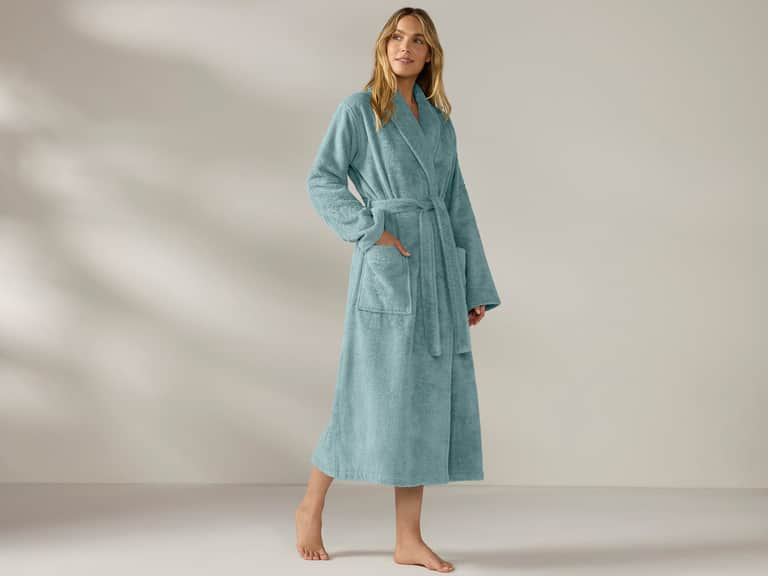
Robe construction matters, too. A garment may use different fabrics in different areas, or include seams, cuffs, a collar, and a belt that influence how it hangs and feels. A shawl collar can add a cozy frame around the neck; a belt lets the wearer adjust the wrap; pockets can be useful but may add bulk. These features affect wearability rather than the cotton loops themselves, yet they help determine whether a robe feels comfortable in real life.
- Loop height: Taller loops can create a lofty, towel-like texture, while shorter loops may feel more compact.
- Loop density: Closely arranged loops can make a fabric feel substantial, but density alone does not tell you how quickly it will dry.
- Yarn character: Fiber quality and spinning influence smoothness, resilience, and the way the fabric feels against the skin.
- Overall construction: Seams, hems, collars, and garment shape affect comfort, drape, and how easily the robe can be cared for.
What fabric weight tells you—and what it cannot
Fabric weight is often used as a quick way to compare towels and robes. In textiles, weight may be expressed as grams per square metre, commonly abbreviated as GSM. The figure describes the mass of a certain area of fabric. In general, a higher number indicates a heavier fabric, while a lower number suggests a lighter one. But it is important not to treat weight as a complete comfort score.
A heavier cotton robe may feel more enveloping and warm, particularly in a cool room. It may also be less convenient to pack, take longer to dry, and feel like too much in a warm or humid climate. A lighter robe can be easier to move around in and may dry more readily, but it may offer less insulation and a less cushioned feel. These are broad tendencies, not guarantees: a robe’s loop structure, fiber, weave, cut, and finishing all affect the experience.
Two robes with similar fabric weight can feel surprisingly different. One may have longer, more open loops; another might be tightly constructed and compact. A thick collar or layered front can add warmth and bulk even if the body fabric feels relatively light. If a product description gives a weight figure, treat it as one useful clue. If it does not, consider the intended use, the construction details provided, and care instructions.
In other words, “heavier” does not always mean “more absorbent,” “softer,” or “better.” A dense robe might feel reassuringly substantial but be slow to dry between uses. A lighter terry robe may absorb enough for a quick post-shower wrap while being less cumbersome on a hook. The most practical choice is the one that fits the household’s climate, routine, storage, and personal preference—not the largest number on a specification sheet.
Softness, absorbency, warmth, and drying time: how they connect
These qualities often overlap, but they are not interchangeable. Softness is the sensation of the textile against the skin. Absorbency describes how readily the fabric takes up water. Warmth is affected by the fabric’s mass, structure, coverage, and the air it holds. Drying time depends on how much water the robe retains, how thick and dense it is, and the conditions in which it hangs or tumbles.
Terry loops offer a larger exposed surface than a flat fabric, which can support moisture uptake. Yet absorbency also depends on fiber properties and any finishes applied during manufacturing or laundering. A very plush robe may take up water well, but the same thick structure can hold more moisture and require more time to dry. That trade-off is especially noticeable when a robe is used frequently and has limited space to air out.
Warmth follows a similar pattern. More material and a fuller surface can make a robe feel cozy, but a robe’s coverage and fit matter as well. A generous wrap, long sleeves, and a collar may retain warmth differently from a lightweight, open-front style. If a robe is meant mainly for post-bath drying, absorbency may be central. If it is intended for relaxed mornings, a lighter drape or easy movement may matter more.
Consider your routine before comparing specifications. Is the robe used immediately after bathing, worn over sleepwear, or kept near a pool? Does it need to dry quickly between uses? Will it be washed often, and is there room to air-dry a bulky garment? These everyday questions can narrow the options more effectively than chasing a single ideal weight or a particular description such as “cloud-like.”
Choosing a robe for everyday use
Start with the job you want the robe to do. For a post-shower layer, cotton terry offers a familiar combination of softness and moisture absorption. For a robe you expect to wear around the house for extended periods, think about its weight, length, ease of movement, and how comfortably it sits when belted. A plush fabric can be inviting, but it should not feel so cumbersome that it stays on the hook.
Check the details that affect fit and function. A belt should wrap securely without requiring an uncomfortable pull. Sleeves should allow movement, while cuffs should not feel restrictive. Pockets can hold small essentials, though they may add weight when filled. Collar shape, robe length, and the amount of overlap at the front influence coverage and warmth. Sizing information is useful, but a robe’s intended fit can differ between designs, so review garment-specific guidance where available.
Fiber content is another starting point, not the final answer. A robe made from 100% cotton can still vary widely in texture and weight. A product description that names loop construction, fabric feel, origin, and care directions provides a more complete picture. For example, the Unisex Cloud Loom Organic Robe is described as 100% organic cotton with single-loop construction and a thick, lofty feel. Its shawl collar, adjustable belt, and side pockets are practical design features; its stated care guidance recommends a cold, gentle wash and low tumble drying. Those details offer a useful illustration of how material, construction, garment features, and maintenance sit alongside one another when assessing a robe.
That description should not be read as a universal promise about how every wearer will experience a fabric. Personal preferences differ, and home conditions matter. A robe that feels perfectly plush in a cool, dry room may feel too warm in a humid climate. When possible, prioritize clear, specific information over dramatic adjectives, and match the garment to the way you plan to use it.
How to keep cotton loops comfortable
Good robe care is less about elaborate rituals and more about following the garment’s care label. Cotton terry can lose some of its original feel when it is exposed to unnecessary heat, harsh treatment, or product buildup. A routine suited to the fabric helps maintain softness and keeps the loops from becoming stiff, flattened, or rough over time.
Wash a robe according to its label, using a cycle and temperature appropriate for the item. Washing with similar colors can help avoid color transfer. Avoid overcrowding the washer: terry needs room to move through water and rinse effectively. If the drum is packed too tightly, detergent may not rinse out as well, and a thick robe may emerge less clean or feel less fresh.
Use detergent in a measured amount. Excess detergent can leave residue in the fabric, and residue may make cotton feel less soft. Fabric softener can also leave a coating that affects how absorbent some terry fabrics feel, so consider whether it is necessary and follow the product label. If a robe feels stiff, check the washing instructions and whether detergent is being overused before assuming the fabric has reached the end of its useful life.
After washing, shake the robe gently to release folds and help the fabric settle. Tumble-dry only as directed, and choose a lower setting when the care label permits. High heat can place extra stress on fibers and may affect fit or feel. Removing a robe promptly once it is dry can reduce deep creasing and keep it from sitting in a warm, damp drum. If air-drying, hang it where air can circulate rather than pressing it against a crowded row of garments.
- Read and follow the care label before washing or drying.
- Wash with similar colors and avoid cramming the machine full.
- Measure detergent carefully and rinse thoroughly.
- Use low heat only when the garment’s instructions allow it.
- Allow the robe to dry completely between uses, particularly in a humid bathroom.
Common assumptions worth reconsidering
“A heavier robe must be more absorbent.” Weight can indicate a substantial fabric, but it does not describe every element that determines water uptake. Fiber, loop structure, and finishing matter, too.
“More loops always mean more softness.” Loop height and density contribute to surface feel, but the yarn and finishing influence softness as well. A dense, plush fabric can feel different from an airy one, and neither texture is automatically more comfortable for everyone.
“A robe that feels soft in the store will stay that way without special care.” Repeated washing, detergent residue, high heat, and friction can change how cotton feels. Regular, label-guided care is more reliable than expecting any fabric to remain unchanged.
“Cotton robes all dry at about the same speed.” A robe’s thickness, construction, water retention, ventilation, and drying method affect how long it takes to dry. A bulky robe may need more time and space than a lighter garment.
These distinctions help set realistic expectations. Textile terms can narrow a search, but they cannot predict every detail of hand feel or performance in a particular home. Consider them clues to investigate, not guarantees.
A quick comparison checklist
When comparing bath robes, use a short checklist that balances tactile preference with daily practicality. The goal is not to find the most elaborate fabric description; it is to understand what the garment is likely to offer and what trade-offs come with it.
- Material: Is the fiber content clearly stated?
- Construction: Does the description identify terry, loops, or another fabric structure?
- Weight and feel: Is it described as light, compact, substantial, or lofty—and does that suit your climate?
- Use: Is the robe intended primarily for post-bath wear, lounging, or both?
- Design: Do the length, collar, sleeves, belt, and pockets work for your routine?
- Care: Can you follow the washing and drying instructions with your available laundry setup?
The takeaway: plushness is a combination
A plush robe is the result of several choices working together. Cotton provides the fiber, but loop construction gives terry its characteristic raised surface. Yarn affects smoothness and hand feel. Fabric weight can point to how substantial a robe may feel, while the overall structure and garment design influence warmth, coverage, and movement. Meanwhile, the very qualities that make a thick robe feel cozy can also make it slower to dry.
For everyday use, there is no single best combination. A person who wants a warm, enveloping layer may welcome a thicker robe. Someone who lives in a humid climate, has limited drying space, or prefers easy movement may find a lighter option more practical. Matching construction and care needs to your routine is the most dependable way to choose.
So the next time a robe feels wonderfully soft, look a little closer. Ask whether the loops are open or compact, whether the fabric weight suits the season, and whether the care instructions fit your laundry habits. That small bit of textile know-how can make the difference between a robe that is merely plush at first touch and one that remains a comfortable part of your daily routine.